Training seminar for neurosurgery residents
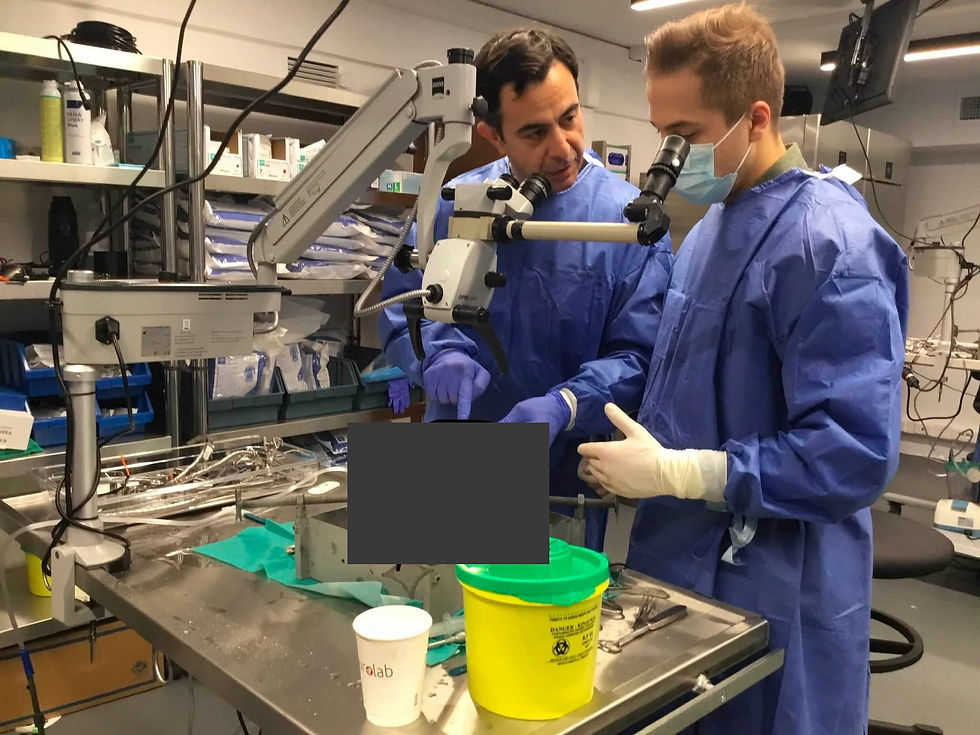
Dr Mazarakis, Assistant Professor of Neurosurgery at the Aristotle University of Thessaloniki, recently participated as lecturer and instructor in the 3rd Preparatory Neurosurgery Workshop organised by the Hellenic Neurosurgical Society, which took place in Athens on 30 and 31 January. The seminar was held with notable success, aiming to support the training of residents in the early years of their specialty.

Training in neurosurgery is a multi-year, structured, and highly demanding process that combines clinical experience, surgical skill, and academic activity. Its goal is the development of an autonomous, safe, and scientifically up-to-date neurosurgeon, aligned with European training standards.

The modern specialty programme is not limited to the acquisition of technical skills but defines clear educational outcomes (competencies) in knowledge, skills, and attitudes. The knowledge component covers neuroanatomy, neurophysiology, pathology of the central and peripheral nervous system, diagnostic methods, and the principles of both conservative and surgical management.

Technical skills range from basic procedures (craniotomies, emergency decompression, management of cranio-cerebral trauma) to specialised operations involving tumours, vascular lesions, the spine, and functional neurosurgery. At the same time, the training places emphasis on non-technical skills, such as communication with patients and families, emergency management, teamwork within multidisciplinary groups, and awareness of personal limitations. Clinical and surgical activity is complemented by structured theoretical education, including courses, seminars, and journal clubs on a regular basis.

Current challenges include maintaining a balance between training and service workload, the implementation of working-hour restrictions, the rapid advancement of technology, and the need for lifelong learning after completion of specialist training. Thus, neurosurgical education does not constitute a closed, time-limited stage, but the beginning of an ongoing process of professional and scientific development.

The present photographic material was issued by the organisers of the 3rd Preparatory Neurosurgery Workshop.


Comments